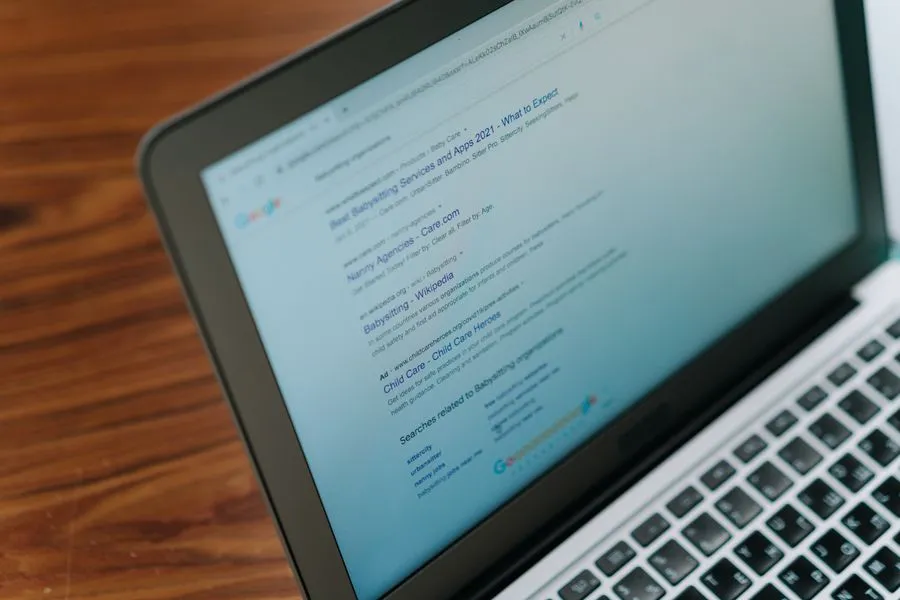
SEO stands for search engine optimisation. It is the work of making your website appear in Google's unpaid results when someone searches for what you sell. You are not buying the position, you are earning it, which is why it takes months rather than days and why it keeps working after you stop paying. This post covers how search engines decide who ranks, the three types of SEO, what it costs in Naira, how long it realistically takes in Nigeria, and the cases where your business should not bother with SEO yet.
SEO is how your website earns traffic from Google without paying for ads.
That is the whole concept. Everything after this is detail.
The direct answer: SEO stands for search engine optimisation. It is the practice of making your website appear when someone searches Google for what you sell. You are not buying the position. You are earning it, by making your site something Google can find, read, trust, and confidently show to a person who just typed a question.
You have probably already googled your own business name to see what came up. We all have. It is fine. Whatever you saw, and wherever you appeared, is the thing SEO exists to change.
Here is how it actually works, what it costs in Naira, how long it takes, and when you should skip it entirely.
What is SEO, in plain English
SEO is the work of getting your website to show up in Google's unpaid results when someone searches for what you offer.
Split the phrase and it explains itself. Search engine: Google, which handles the overwhelming majority of searches in Nigeria. Optimisation: the work you do so the search engine picks you instead of the person selling the same thing three streets away.
Every Google results page has two kinds of listings:
- Paid results. Ads. You pay for each click. Stop paying and they disappear the same hour.
- Organic results. Earned. You cannot buy them at any price. They keep sending you customers long after you stop spending.
SEO is only ever about the second kind. That distinction matters more than it sounds, because "we will put you at the top of Google" from an agency can quietly mean "we will run ads for you." Different service. Different bill. Worth asking which one you are being sold.
What SEO is not
SEO is not writing blog posts with keywords sprinkled through them. That is writing. Useful sometimes, but it is not SEO.
Nine out of ten clients who come to us after "trying SEO" were not doing SEO. They were paying someone to publish two articles a month that nobody read, with no technical work, no keyword research, and no links. The invoices were real. The SEO was not.
SEO, SEM, and "SEO marketing": the words people mix up
Three phrases get used interchangeably in proposals, usually by people who benefit from the confusion. They are not the same thing.
SEO is the organic half: earning unpaid positions. SEM, search engine marketing, is the umbrella term that covers both the organic half and the paid half, though in most of the industry SEM has drifted to mean the paid half specifically. SEO marketing is not a technical term at all. It is a phrase people search for when they mean "using search to get customers," and it usually covers both.
Why this matters to you and not just to pedants: the words decide the invoice. An agency quoting ₦200,000 a month for "SEM" may be spending ₦150,000 of that on ad credit that stops working the day you stop paying, and ₦50,000 on actual optimisation. That can be a perfectly reasonable deal. It is a very different deal from ₦200,000 of SEO. Ask which portion is ad spend and which is work. Any honest answer takes about ten seconds.
The SEO definition worth memorising
If you keep one sentence from this post: SEO is making the best answer to a question you want to be found for, and then making sure Google can tell that it is the best answer. The first half is content. The second half is everything else.

How search engines actually work
Google finds your pages, files them, then decides what order to show them in. Three steps, and SEO is the work of not failing any of them.
Crawling
Google runs software called Googlebot that follows links around the internet and collects pages. If no link points to your page, and your sitemap does not mention it, Googlebot may simply never arrive. A page nobody can reach is a page that cannot rank.
Indexing
Once collected, the page gets stored and understood in a giant database called the index. Google works out what the page is about, what question it answers, and whether it is a near-copy of something already filed. Pages that are broken, blocked, or duplicated get quietly dropped here. Most business owners never learn this happened, because Google does not send a letter.
Ranking
When someone searches, Google does not scan the internet. It scans its index, which it already built in advance, and orders the results in about half a second. That ordering is what everyone means by "ranking."
This is the part worth holding onto: Google ranks pages, not websites. You do not rank for a keyword because your company is good. A specific page ranks because it answers a specific question better than the other pages that tried.
What AI Overviews changed, and what they didn't
Search results now often open with an AI-written summary, and ChatGPT, Perplexity and Gemini increasingly answer questions that used to start on Google. Plenty of people have concluded that SEO is finished. It is not, but the target moved.
Two things are true at once. Fewer people click through when the answer is simple, so "what time do banks close" traffic is gone and is not returning. And the AI summary has to source its answer from somewhere, which means being the page it quotes is now its own prize.
What gets quoted, in our experience, is depressingly unglamorous: pages that answer the question in one clean sentence near the top, state specific numbers instead of vague claims, and do not contradict themselves. An AI model reading "SEO costs vary depending on your needs" has nothing to extract. Reading "SEO retainers in Nigeria run ₦80,000 to ₦280,000 a month," it has a fact.
The good news for anyone learning this in 2026: the work that gets you quoted by an AI is the same work that ranks you on Google. Be clear, be specific, be consistent, answer the actual question. There is no separate trick, despite a growing number of people selling one.

The three types of SEO
Every legitimate SEO engagement is some combination of exactly three workstreams. Any agency proposal that does not touch all three is missing something, and you are allowed to ask which one.
Technical SEO
Making sure Google can crawl, render, and understand your site. Site speed, mobile rendering, broken pages, duplicate meta descriptions, sitemaps, structured data.
This comes first, always. If Googlebot cannot read your site properly, your content and your links do not matter. Most Nigerian business websites we audit have three or four technical problems suppressing their rankings, and the owner has no idea, because a slow site looks fine on the office wifi.
On-page SEO
What lives on each page: the title tag, the headings, the actual content, the internal links between pages.
Every page should answer one specific question for one specific search. This is where most sites lose. A page titled "Services" and a page titled "About Us" tell Google nothing about what question they answer, which is why they rank for nothing. Google is not being difficult. It genuinely does not know what you meant.
Off-page SEO
Mostly backlinks: other websites linking to yours. Google treats a link as a vote of confidence from one site to another.
Quality beats quantity by an enormous margin. One link from a Nigerian newspaper is worth more than fifty from directories nobody visits. This is where the cheap packages fall apart. Anyone selling "500 backlinks for ₦20,000" is not building your authority, they are building your problem.

What actually moves your rankings
Google uses a lot of signals. You do not need all of them. You need three ideas.
Relevance
Does the page actually answer the search? Not "does it contain the word." Does it answer it. Google got good at telling the difference years ago, which is why keyword stuffing stopped working and the people still selling it stopped mentioning results.
Authority
Do other credible sites vouch for you? A client once asked why a competitor with visibly worse content outranked them. We looked. The competitor had 47 backlinks from Nigerian news sites. Our client had 2. The content was not the deciding factor. The authority was.
Experience
Does the page load quickly, work on a phone, and not ambush the reader with pop-ups? Google measures this. So does every customer who ever closed a tab in frustration.
A rule of thumb worth keeping: relevance decides what you rank for, authority decides how well, experience decides whether anyone stays once they arrive.
What does not move rankings
Worth saying plainly, because money gets spent here every day:
- Keyword density. There is no magic percentage. Nobody at Google is counting. Writing "SEO services Lagos" nine times does not work and reads like a ransom note.
- Meta keywords tag. Google stopped using it in 2009. If it appears in an agency's audit, that audit is a template from a different decade.
- Buying links in bulk. Not neutral, actively harmful. The 500-links-for-₦20,000 offer is a way to spend money making things worse.
- Posting for the sake of posting. Two thin articles a month does nothing. Content volume only compounds when each piece targets a real search with real intent behind it.
- Your domain being old. Age alone is not a ranking factor. Plenty of 2011 domains rank for nothing at all, quietly, forever.
The pattern here: everything on that list is easy to sell because it is easy to show on an invoice. Real ranking work is harder to photograph.

SEO in Nigeria is a different game
Search behaviour in Nigeria does not match UK or US patterns, and keyword lists built from foreign templates miss the actual opportunities.
A used car dealer in Abuja kept insisting his main keyword was "certified pre-owned vehicles Abuja." We pulled the data. Zero searches a month. Nobody in Nigeria types that. Meanwhile "tokunbo cars Abuja" had 2,400 searches a month. Same cars. Same dealership. Different words entirely.
We rebuilt the strategy around what Nigerians actually type. Organic traffic went from 40 visits a month to 1,100 in four months. Nothing about the business changed. Only the vocabulary.
Why this keeps happening
Businesses describe themselves in the language of their industry. Customers search in the language of their life. The gap between those two is where most Nigerian SEO budgets quietly die.
The keyword nobody searches for is like a business card printed in Hausa handed out at an Igbo wedding. Technically correct, completely unhelpful.
Add to that: most Nigerian search happens on mobile, often on a connection that punishes a heavy site, and increasingly the answer gets read off an AI summary rather than clicked. An agency running a template built for desktop searchers in Manchester will produce a tidy report and no customers.
The practical fix is unglamorous. Before targeting any keyword, check its actual Nigerian search volume rather than its global one, then check what Google already shows for it here, because the results page tells you what Google thinks the searcher wants. If the top ten are all shops and you have written a guide, you have already lost, no matter how good the guide is. Nigerian search volumes look small next to global numbers and people talk themselves out of good keywords for that reason. A phrase with 300 local searches a month, all from people ready to buy, beats a phrase with 30,000 searches from people in another hemisphere who will never call you.

How long SEO takes to work
Honest ranges, from our own client base, not best-case scenarios:
| What you are targeting | Realistic timeline | |---|---| | Low-competition local keywords | 60–90 days | | Medium-competition keywords | 4–6 months | | Competitive national terms | 6–12 months |
Across our clients, organic traffic rises by an average of 340% after six months, and 81% reach page 1 for their primary keyword within twelve. Those numbers assume the technical foundations were fixed in month one and the work never stopped.
Why anyone promising 30 days is lying
Any agency promising rankings in under 30 days is selling you something else. They are either targeting keywords nobody searches for, so the ranking is real but worthless, or they are counting on you not checking.
Most Nigerian businesses that say they tried SEO tried it for 60 days and then stopped, which is roughly equivalent to planting a tree, checking on it after a month, and concluding that trees do not grow.
SEO compounds. Months 1 to 3 are foundations, and they look like nothing is happening because from the outside nothing is. Months 4 to 6 are when the movement starts. Stopping at month 3 does not save you money, it just means you paid for the boring part and left before the payoff.

What SEO costs in Nigeria
Real numbers, as of 2026, agreed in writing before anyone starts:
| What you get | Cost | |---|---| | SEO starter (1–3 keywords, local) | ₦80,000/month | | SEO growth (5–10 keywords) | ₦150,000/month | | Full retainer (15+ keywords + content) | ₦280,000/month | | Website audit (technical + on-page) | ₦120,000 one-off | | Google Business Profile optimisation | ₦45,000 one-off |
Why cheap SEO is the expensive option
A ₦30,000 a month "SEO service" that does nothing for twelve months costs you ₦360,000 and a year of lost rankings while your competitor compounds. A ₦150,000 retainer that actually moves in six months is, in every sense that matters, the cheaper one.
Anything well under ₦80,000 a month for full-service SEO means not enough hours are reaching your account. The work is not magic, it is hours. The arithmetic is not complicated.
When you don't need SEO
Here is the part most agency websites leave out.
Most Nigerian businesses do not need SEO yet. They need a website that works. If your site takes more than 3 seconds to load on a Nigerian mobile connection, you are losing people before they see a single thing you sell. That is not an SEO problem, it is a fundamentals problem, and no amount of keywords fixes it. Paying for SEO while your site is slow is advertising a shop that is always locked when customers arrive.
Skip SEO for now if:
- Your site is slow. Fix speed first. Our clients average 1.8 seconds after optimisation. Get there, then rank.
- Your Google Business Profile is empty or wrong. For local businesses, a properly optimised profile adds 40–60% more discovery calls within 90 days, costs ₦45,000 once, and works far faster than a retainer. Do that first.
- You need customers this month. SEO does not move that fast. Run ads while the organic work builds underneath.
- Nobody searches for what you do. Some businesses genuinely get 90% of their clients from referrals or Instagram. Check the search volume before you fund a channel your customers do not use.
We tell clients this before they pay us, and sometimes it means they do not. That is fine. A restaurant in Lekki needed one afternoon of Google Business Profile work, not a retainer. Ninety days later: 34 reviews, 4.7 stars, 61% more calls straight from Maps. Selling them SEO first would have been the more profitable choice and the wrong one.

How to learn SEO yourself
You can do a real portion of this without hiring anyone, and you should try before you pay.
The free tools worth your time
- [Google Search Console](https://search.google.com/search-console/about). Free, official, and it tells you exactly what you already rank for and what Google thinks your site is about. Most business owners have never opened it.
- [Google's SEO Starter Guide](https://developers.google.com/search/docs/fundamentals/seo-starter-guide). Written by the people who run the algorithm. Free. Still the best first read available.
- [Core Web Vitals on web.dev](https://web.dev/learn/performance/). Where you learn why your site is slow, in specifics rather than vibes.
The order to learn it in
Do not start with backlinks. Everyone starts with backlinks. Start here instead:
- Set up Google Search Console and look at real data about your own site for a week.
- Fix your speed. Compress the images. This alone fixes more Nigerian sites than any other single change.
- Sort your Google Business Profile if you serve a local market.
- Learn keyword research properly, in Nigerian terms, so you stop guessing what people type.
- Rewrite your page titles so each page answers one clear question.
- Then, and only then, worry about links.
Technical SEO and link building are the two areas that stay genuinely hard without tools and practice. Everything above them on that list is learnable by any business owner with an afternoon and mild stubbornness.
How long learning it actually takes
Nobody becomes an SEO in a weekend, whatever the course title says. Realistic version, based on what we see in our own training room:
- A weekend gets you Search Console set up, your speed tested, and your Business Profile fixed. That alone puts you ahead of most Nigerian small businesses, which is less a compliment to you than an observation about the bar.
- A month of consistent effort gets you doing your own keyword research and writing pages that target real searches.
- Six months to a year gets you competent at technical work and links, which is the point where it stops being a hobby.
The people who get good at this are not the ones with the best course. They are the ones who picked one site, usually their own, and kept looking at the data every week until the patterns became obvious. That is the entire secret, and it is why it cannot be sold as a shortcut.
So that is SEO. Not a secret, not a hack, not a proprietary algorithm anybody owns. Just the unglamorous work of being the most obviously correct answer to a question somebody typed, and then making sure Google can tell that you are.
You now know what it is, how the ranking actually gets decided, what it costs in Naira, how long to wait, and when to walk away from it entirely. That is a better working model of Google than quite a few people currently invoicing Nigerian businesses for it are operating with. Whether that saves you ₦360,000 or simply ruins the next sales call you have to sit through, we are comfortable either way.

Want to learn SEO directly from us?
We train individuals and teams on everything in this post, in person at our Abuja hub, online, one-on-one, or as a group session for your staff. Everything we do for clients, we teach.
If you would rather hand it over than learn it, that is a fair call too, and our SEO services page has the honest version of what that involves.
- →How to learn SEO in Nigeria , the step-by-step beginner's version if this post convinced you to try it yourself first.
- →How to do keyword research for your business , the tokunbo problem in full, and how to find the words Nigerians actually type.
- →Website speed in Nigeria , the thing to fix before you spend a naira on SEO. Start here if your site is slow.
- →Our training programs , in person in Abuja, online, one-on-one, or as a group session for your team.
- →What we actually do , SEO, websites, and the honest version of what each one costs.
Want to learn SEO yourself?
We train individuals and organisations across Nigeria and Africa. In person in Abuja, online, one-on-one, or as a group session for your team. Everything we do for clients, we teach. You walk away with skills you can use the next day.

Frequently Asked Questions About SEO
- What is SEO in simple terms?
- SEO is the work of making your website show up in Google's unpaid search results when someone searches for what you sell. You are not paying for the position like you would with an ad, you are earning it by making your site something Google can read, trust, and confidently put in front of a searcher. The trade-off is that it takes months instead of hours, but it keeps working after you stop spending.
- What does SEO stand for?
- SEO stands for search engine optimisation. In practice, the search engine is Google, which handles the overwhelming majority of searches in Nigeria. Optimisation is everything you do to your site so Google chooses your page over a competitor's for a given search.
- How does SEO work?
- Google crawls the web with software called Googlebot, stores what it finds in a database called the index, then ranks pages from that index whenever someone searches. SEO is the work of not failing any of those three stages: making sure Google can reach your pages, understand them, and judge them as the best answer. Worth knowing: Google ranks individual pages, not whole websites.
- What are the 3 types of SEO?
- Technical SEO (making sure Google can crawl, render and understand your site: speed, mobile, broken pages, sitemaps), on-page SEO (what is on each page: titles, headings, content, internal links), and off-page SEO (mainly backlinks from other sites). Technical comes first, because if Googlebot cannot read your site, the content and links do not matter.
- How long does SEO take to work in Nigeria?
- Low-competition local keywords take 60–90 days. Medium-competition keywords take 4–6 months. Competitive national terms take 6–12 months. Across our client base, organic traffic rises an average of 340% after six months and 81% of clients reach page 1 for their primary keyword within twelve. Any agency promising rankings in under 30 days is either targeting keywords nobody searches for or lying.
- How much does SEO cost in Nigeria?
- Legitimate Nigerian SEO runs ₦80,000/month for a local starter package (1–3 keywords), ₦150,000/month for growth (5–10 keywords), and ₦280,000/month for a full retainer with 15+ keywords and content. A one-off technical and on-page audit is ₦120,000, and Google Business Profile optimisation is ₦45,000. Anything well under ₦80,000/month for full-service SEO means not enough hours are reaching your account.
- Can I do SEO myself?
- A good portion of it, yes, and you should try before paying anyone. Set up Google Search Console, fix your site speed, sort out your Google Business Profile, learn keyword research in Nigerian terms, and rewrite your page titles so each page answers one clear question. Do those in that order. Technical SEO and link building are the two areas that stay genuinely hard without tools and experience.
- Is SEO worth it for a small business in Nigeria?
- It depends on whether your customers actually search Google for what you sell. If they do, SEO compounds and eventually costs less per customer than ads. If your site loads in over 3 seconds, fix that first. If you are a local business without a proper Google Business Profile, do that first as well, since it adds 40–60% more discovery calls within 90 days for ₦45,000 once. And if 90% of your clients come from referrals and that channel is healthy, SEO may genuinely not be your best next move.
These Q&As are emitted as FAQPage schema in the page head. Google may show them directly in search results.
Still not sure? Send us a message.
If you have read all of this and still cannot tell whether SEO is the right move for your business right now, send us a WhatsApp message or give us a call. We will look at your site, check whether anyone is actually searching for what you sell, and tell you honestly. Sometimes the answer is that you need a faster website or a Google Business Profile instead, and we will say so. No pitch. Just the honest answer.